Most people who exercise will turn an ankle or pull a muscle at some point. Usually it's a sprain or strain that gets better with simple care at home, but a few signs mean you should get it looked at the same day. Here's how the NHS says to tell the difference, what to do in the first few days, and how to ease back into training.
Normal stiffness, or an injury?
Muscles can feel stiff after a new kind of exercise; easing back in with lighter movement usually helps — see recovery and sleep basics. An injury such as a sprain or strain is different: it tends to bring pain in one particular place, often with swelling, bruising or trouble using that part of your body normally.
Sprains and strains
The NHS explains the difference:
- A sprain is a stretched or torn ligament — the tissue that connects bones at a joint. Sprains are most common in the wrists, ankles, thumbs and knees.
- A strain is an overstretched or torn muscle, often called a pulled muscle. Strains are most common in the feet, legs and back.
Symptoms of both include pain, tenderness or weakness; swelling or bruising; difficulty putting weight on the injury or using it normally; and muscle spasms or cramping.
The first 2 to 3 days
The NHS suggests PRICE:
- Protection — protect the area from further injury, for example with a support or supportive shoes.
- Rest — stop exercising and keep weight off the injury as much as you can.
- Ice — put an ice pack, or a bag of frozen peas wrapped in a tea towel, on the area for up to 20 minutes every 2 to 3 hours.
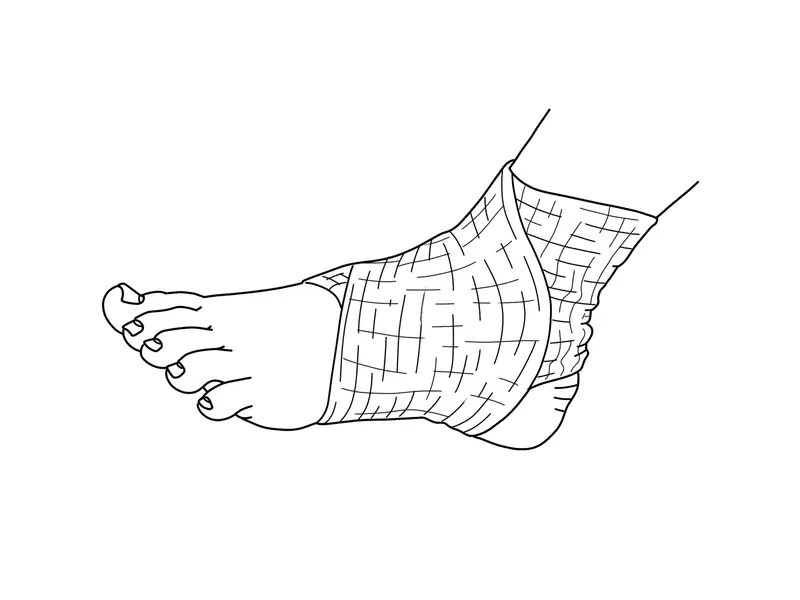
- Compression — wrap a bandage around the injury during the day to support it.
- Elevation — keep it raised on a pillow when you can.
For the first couple of days, the NHS advises avoiding heat (such as hot baths and heat packs), alcohol and massage, as they can make swelling worse. Once the pain allows, gently move the joint or muscle so it doesn't get stiff.
A pharmacist can recommend pain relief, such as paracetamol, or ibuprofen as a gel, mousse or spray to help with swelling; ibuprofen tablets are another option if you need them.
How long it takes
The NHS says most sprains and strains get better within about 2 weeks. It advises avoiding strenuous exercise, such as running, for up to 8 weeks to reduce the risk of injuring it again. Severe sprains and strains can take months to get back to normal.
Getting back to exercise
- Build up gradually. Start with gentle, low-impact movement — a walk, a low-impact session or mobility work — before going back to running, jumping or heavy weights.
- Warm up first. The NHS says warming up before exercise helps lower the risk of sprains and strains. Our getting started safely guide includes the NHS warm-up.
- Take care when you're tired. The NHS says to be careful when your muscles are tired.
- Stop if it hurts. Pain that is sharp, in a joint, or getting worse is a sign to stop and get advice, not to push through.
If recovery is slower than expected, physiotherapy may help. In some areas you can refer yourself to NHS physiotherapy without seeing a GP first; physiotherapy is also available privately.
When to get help
Go to an urgent treatment centre or call NHS 111 if:
- the pain is severe or getting worse;
- the swelling or bruising is large, or getting bigger;
- you can't put weight on it, or walk more than a few steps;
- the area is very stiff or hard to move;
- it isn't improving after treating it yourself;
- you have a high temperature, or feel hot and shivery — which could mean an infection.
See a GP if the injury is getting worse or isn't improving with self-care.
Call 999 or go to A&E if you heard a crack when you injured it, the area looks misshapen or is at an odd angle, it feels numb or tingly, or the skin is blue, grey or cold. These can be signs of a broken bone. Don't drive yourself — ask someone to take you, or call an ambulance.
Sources
- NHS: Sprains and strains — checked 23 Nov 2026