Cardio
Brisk walking
Walking with purpose — one of the easiest ways to build your weekly activity.
Beginner Low impact
How to do it
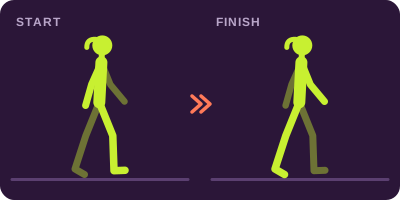
- Stand tall and look ahead, not down.
- Walk faster than a stroll, letting your arms swing naturally.
- Roll from heel to toe with each step.
- Check your pace with the talk test: you can still talk, but not sing.
Form tips
- The NHS describes a brisk walk as about 3 miles an hour.
- Short walks add up — a brisk 10 minutes counts.
Common mistakes
- Overstriding — take quicker steps rather than longer ones.
Easier and harder
Make it easier
Slow down and build up the time gradually.
Make it harder
Add hills, stairs, or short faster stretches between lamp posts.
Sources
- NHS: Walking for health — checked 3 Oct 2026
- NHS: Physical activity guidelines for adults aged 19 to 64 — checked 3 Oct 2026