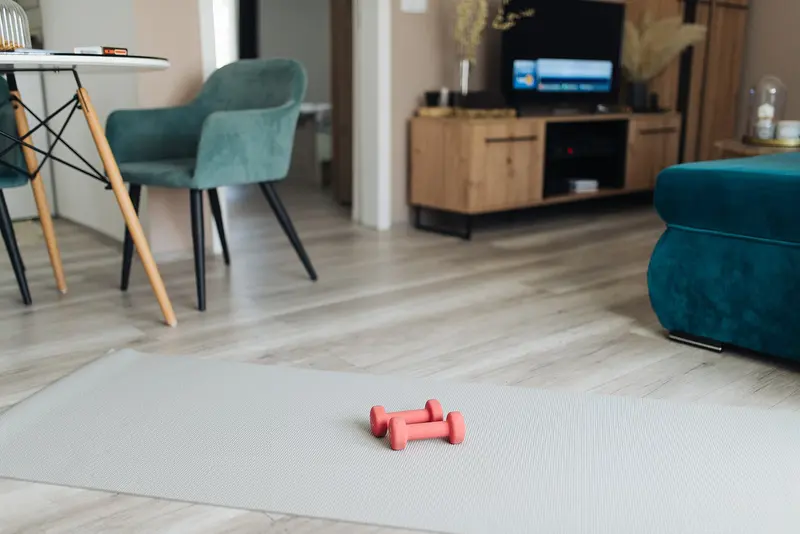
By late November the evenings close in early, and the idea of heading out after work gets harder to sell to yourself. The good news is that strength work is one of the easiest kinds of exercise to do at home, in normal clothes, in the space between the sofa and the television.
The UK Chief Medical Officers' guidelines suggest muscle-strengthening activities on at least 2 days a week to keep muscles, bones and joints strong. They also say "every minute counts" and "any activity is better than none". A 15-minute session twice a week is a real start.
Get the room ready
- A sturdy chair with no wheels and no arms. The NHS strength exercises use one for several moves, sitting with your feet flat on the floor and knees bent at right angles.
- A clear patch of floor, with rugs flat and anything you could trip over moved out of the way.
- Water nearby and loose, comfortable clothing, as the NHS suggests.
- A warm enough room. The NHS advice on keeping well in cold weather is to heat the rooms you use regularly, such as the living room, to at least 18°C — a cold room is not a pleasant place to warm up in.
Start with a few minutes of marching on the spot and arm circles to warm up. Our guide to getting started safely explains warm-ups and how hard to work.
A simple routine from the NHS strength exercises
The NHS page on strength exercises sets out gentle moves for people who have not exercised for a while. Here is how they fit together into one short session, with the NHS's suggested starting numbers:
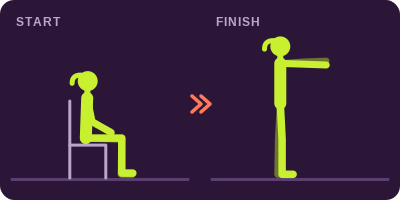
- Sit-to-stand — 5 repetitions.
- Mini-squats — 5 repetitions, keeping your back straight and moving slowly.
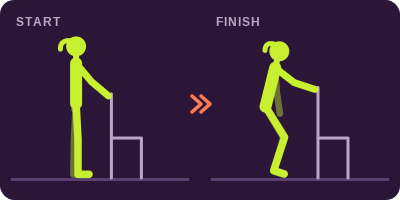
- Calf raises — 5 repetitions.
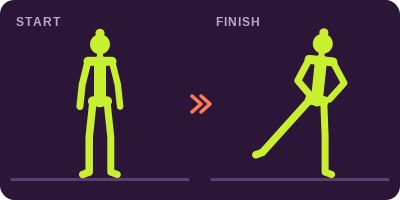
- Sideways leg lift — 5 on each leg.
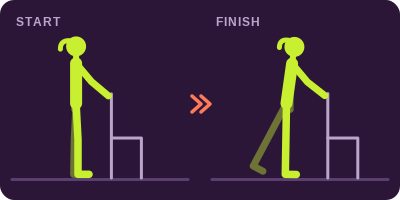
- Leg extension — 5 on each leg, sitting tall; the NHS says you can hold each for up to 5 seconds and to avoid arching your back.
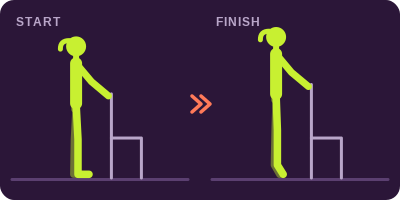
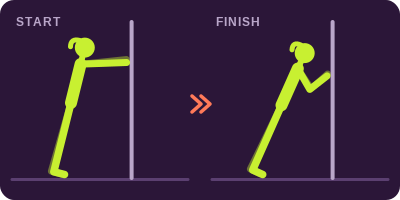
- Wall press-ups — 3 sets of 5 to 10.
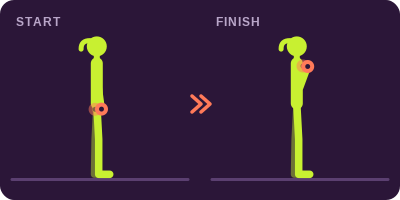
- Bicep curls — 3 sets of 5 with each arm, which you can do sitting down.
The NHS advice is to try these at least twice a week and to build up slowly, gradually adding repetitions over time. Each of these moves is in our exercise library with steps, common mistakes and an easier and harder version:
When you are ready for more
Once the simple routine feels comfortable, our timed home workouts take the same idea further. Each one has a built-in interval timer, so you can press start and follow along:
If you have a resistance band or a pair of dumbbells, the resistance band and dumbbell strength pages have sessions that build on the same moves. Our home gym guide covers what is worth buying first — and what can wait.
Prefer to follow a video?
The NHS also has a set of free Fitness Studio videos, grouped into aerobic exercise, strength and resistance, and pilates and yoga. They are a good option if you like being talked through a session.
Making it stick
- Tie it to something you already do — straight after the evening news, or while the kettle boils for the first set of calf raises.
- Keep the chair in place so there is nothing to set up.
- Count sessions, not minutes. Two sessions a week, every week, beats one long session you dread. Our guide to staying motivated has more ideas.
Dark evenings do not have to mean a pause in your training. A chair, a warm room and fifteen minutes is enough to keep going until the light comes back.
Sources
- NHS: strength exercises — checked 22 Nov 2026
- UK Chief Medical Officers: physical activity for adults and older adults (infographic text) — GOV.UK — checked 22 Nov 2026
- NHS: keep warm, keep well — checked 22 Nov 2026
- NHS: Fitness Studio exercise videos — checked 22 Nov 2026
Checked 22 November 2026. Guidance changes — follow the links above for the current version.