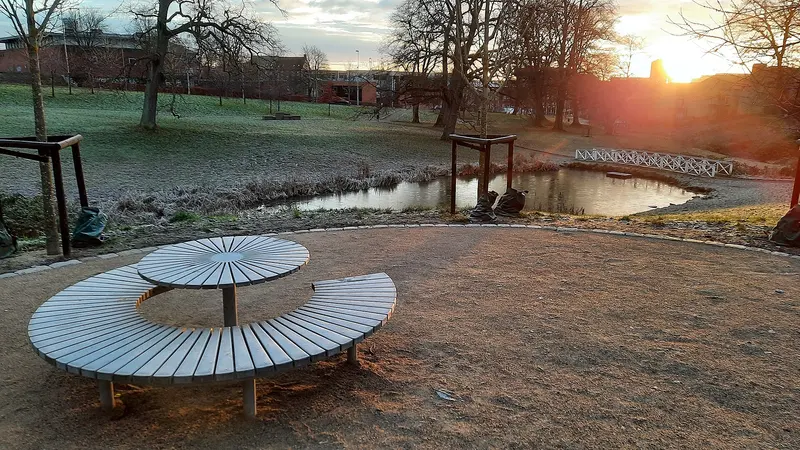
Winter does not have to mean giving up outdoor exercise. A frosty walk or a cold, bright run can be one of the best parts of the week. But cold air does affect some people more than others, and two common conditions, asthma and Raynaud's, are worth planning around.
This post summarises guidance from Asthma + Lung UK and the NHS as it read on 23 November 2026. It is general information, not medical advice. If you have a health condition and are not sure what is right for you, ask your GP, asthma nurse or pharmacist.
Asthma and cold air
Asthma + Lung UK explains that "cold air can cause your airways to narrow", which can increase mucus and make breathing harder. Cold, dry air can also irritate the airways, making wheezing, coughing and breathlessness worse.
Exercise adds to this. When you are working hard you breathe through your mouth, so the air reaching your lungs has not been warmed or moistened by your nose. The charity lists cold weather as a possible trigger of exercise-related symptoms.
What Asthma + Lung UK suggests
- Warm the air you breathe. Breathe in through your nose rather than your mouth where you can, and try "loosely wrapping a scarf around your nose and mouth" when you are outside.
- Always carry your reliever inhaler, and use it as soon as you notice symptoms.
- Take your preventer (or MART) inhaler every day as prescribed. The charity says this lowers the risk of symptoms triggered by exercise.
- Check the weather. If it is very cold or windy, shorten your time outside, or stay in. Our home strength routine for dark evenings and the short indoor sessions below are an alternative on bitter days.
- Keep a note of your symptoms to spot patterns.
A sign to act on
Asthma + Lung UK says that "for most people, if exercise triggers your asthma, it's a sign your asthma is not as well controlled as it could be". If exercise is bringing on symptoms, or you need your reliever more than usual, ask your GP or asthma nurse to review your medicines and update your asthma action plan. If your symptoms are getting worse, the charity advises making an urgent appointment.
For clinical advice, its helpline is 0300 222 5800 (weekdays, 9am to 5pm).
Raynaud's: cold fingers and toes
The NHS describes Raynaud's as reduced blood flow to the fingers and toes, often triggered by cold, anxiety or stress. Fingers and toes can change colour, going white, blue or red (on darker skin, fingertips may look paler), and can hurt, feel numb or tingle. Ears, nose, lips or nipples can be affected too. It says Raynaud's is "common and does not usually cause severe problems".
Exercise helps, with some planning
Among its self-help tips, the NHS says to "exercise regularly – this helps improve circulation". It also suggests:
- keeping warm, especially your hands and feet
- avoiding sudden changes in temperature
- breathing exercises or yoga to help you relax
- not smoking, and limiting caffeine, which may trigger symptoms
For exercise, that might mean warming up indoors before you head out, putting gloves and warm socks on before your hands and feet get cold, and not going straight from a warm house into a freezing wind.
When to see a GP
The NHS suggests seeing a GP if your symptoms are very bad or getting worse, affect your daily life, affect only one side of your body, come with joint pain, skin rashes or muscle weakness, or start for the first time after the age of 30.
Dressing for cold-weather exercise
Asthma + Lung UK notes that "a lot of thin layers can keep you warmer than one thick layer", and suggests covering your head, hands and feet. Layers are especially useful for exercise, because you can take one off as you warm up and put it back on when you stop, rather than getting sweaty and then chilled.
A few practical points:
- Warm up properly. Our getting started safely guide explains why, and every workout on the site has a built-in warm-up.
- Be seen and be steady. If you are out in the dark or on icy paths, see walking and running in the dark.
- Change out of damp clothes soon after you finish.
Short sessions for bitter days
When it is too cold to go out, these short sessions can be done indoors:
The UK guidelines are weekly, so a few shorter indoor sessions still count; our guide to the guidelines explains how.
Sources
- Asthma + Lung UK: cold weather and your lungs — checked 23 Nov 2026
- Asthma + Lung UK: exercise, physical activity and asthma — checked 23 Nov 2026
- NHS: Raynaud's — checked 23 Nov 2026 (page shows a review date that has passed — check for updates)
Checked 23 November 2026. Guidance changes — follow the links above for the current version.